No one wants recruitment to be hard
On slowing down in the era of speed.
The distance between hiring managers and candidates is growing wider. Automation promised to make recruitment more efficient for everyone, but the trend towards easy hasn't delivered. Convenience has led to volume, and volume has made it harder to differentiate signal from noise. Recruitment is worse for everyone as a result.
Candidates can't justify putting in effort only to be rejected automatically by an ATS, often with very little or no feedback at all. Likewise, it is impossible for recruiters to read and reply appropriately to every applicant when the overwhelming majority of applications are generic and devoid of any personality or feeling. Candidates are invisible, companies are overwhelmed, and the relationship that should be at the centre drifts to the periphery. This gap shows no real sign of closing in the age of AI. It’s a vicious cycle.
I've seen this chasm grow from inside the industry. I understand the very real frustration and hopelessness that candidates feel in this system and also, on the other hand, the disappointment and fatigue recruiters, hiring managers, and founders feel when they receive hundreds, or even thousands, of applications which fail to address selection criteria and communicate almost nothing about the candidate, their skill set, or how they might hope to contribute. This is not for want of trying. We're all doing our best, but the systems are letting us down.
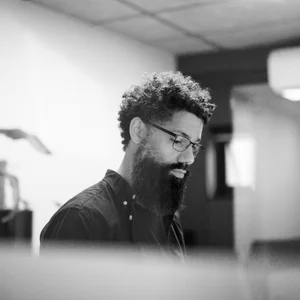
This is why I created Margins. I know how these systems work, and I can help you navigate them. Whether you're a candidate that deserves more engagement or an executive looking to hire with intention, Margins is human-scale recruitment that emphasises craft over convenience, relationship over transaction, and, above all, personality over conformity.
The ethos of Margins is grounded in reflection and intention. I want you to understand your value and take ownership of your story. I help people clarify their goals and move more directly towards them. This reflection gives you the ability to prioritise what matters to you and allocate your energy accordingly. This is not about doing or being more, it is about identifying what would make the greatest impact for you and focusing on that.
For me, relationships make an impact. I have a deep curiosity and interest in people. Over the last 10-15 years, I have had the opportunity and privilege to work with and for some amazing people in some disparate and diverse fields. I have seen that, often, the work we do is one of the most crucial components in our sense of well-being, purpose, and meaning. It’s also clear that if we are not paying attention to our non-work, more interior world, it can be very hard to deliver our full power professionally.
The symbiotic relationship between these inner and outer worlds means that it pays in every way to exercise self-awareness and selectivity in the structure and content of our lives. Put simply, it's important to be happy at work, but it may be more important to be happy outside of work.
I know that my best work is always directly connected to my ability to self-reflect. My productivity, sense of fulfilment, and perhaps even happiness can be measured against how much thought I have put into what I want from life, how I want to show up, and how I want it all to feel.
I believe this level of intention can be applied to recruitment in a way that is more rewarding for all involved and delivers results. Not by reinventing the recruitment wheel but by bringing more of ourselves to the choices we make about work. In allowing ourselves to be more ourselves. More human.
Our world, and the dynamics of work, are evolving rapidly. Uncertainty and change are a feature of our planet and not a bug. Our unique and immense human power rests not necessarily in our ability to keep up with technology but in daring to slow down and giving ourselves time to think. Time to move and act from a place of meaning and intention. Margins is a manifestation of what that means for me.
What does it mean for you?